
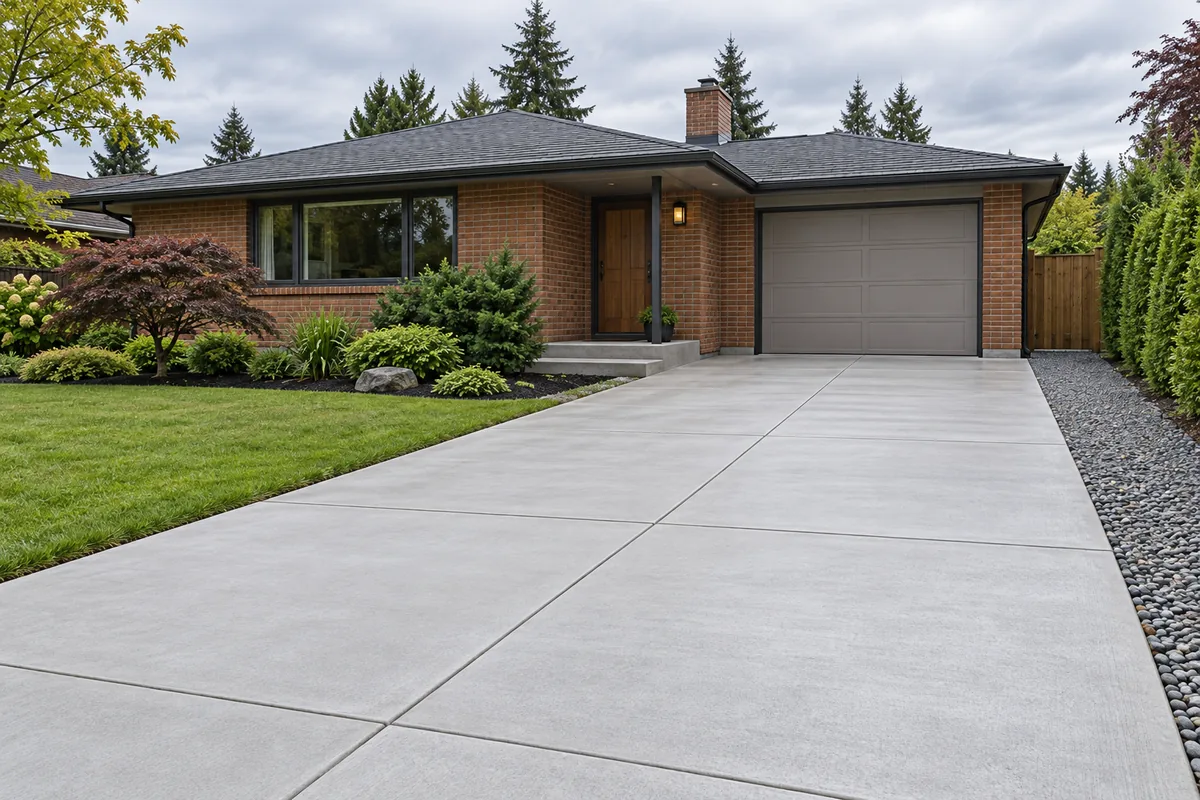
Make room for a sound new surface.
Look beyond the visible cracks
A broken driveway may have more than one cause. Widespread movement, settled panels, deteriorated edges and recurring puddles deserve an assessment of the supporting material and water flow. Replacing only the surface without addressing those conditions can leave the underlying problem unresolved.
Compare replacement with targeted work
A stable driveway with isolated damage may not need complete removal. Ask for the reason behind the recommended boundary: one panel, a section or the entire driveway. Consider the appearance of mixed-age concrete and whether partial work leaves awkward joints or transitions.
Specify removal and restoration
The proposal should identify demolition limits, haul-off, any reinforcement removal and expected excavation. Clarify what happens if unsuitable soil or buried obstructions appear. Lawn edges, irrigation, landscaping and garage access should have a documented protection or restoration plan.
Coordinate daily access
Replacement creates a period when the driveway cannot be used. Confirm the demolition sequence, delivery access, pedestrian route and curing protection. Any estimated schedule should distinguish active construction from the time before vehicles may return.
Questions about concrete driveway replacement
Can the new driveway follow the old layout?
It can be assessed that way, but replacement is also the time to reconsider drainage, width and uncomfortable transitions. Changes near the street should be reviewed for permit requirements.
Is demolition included in an estimate?
Do not assume it is. Ask for written confirmation of removal, disposal, excavation, base preparation and edge restoration so proposals can be compared fairly.