
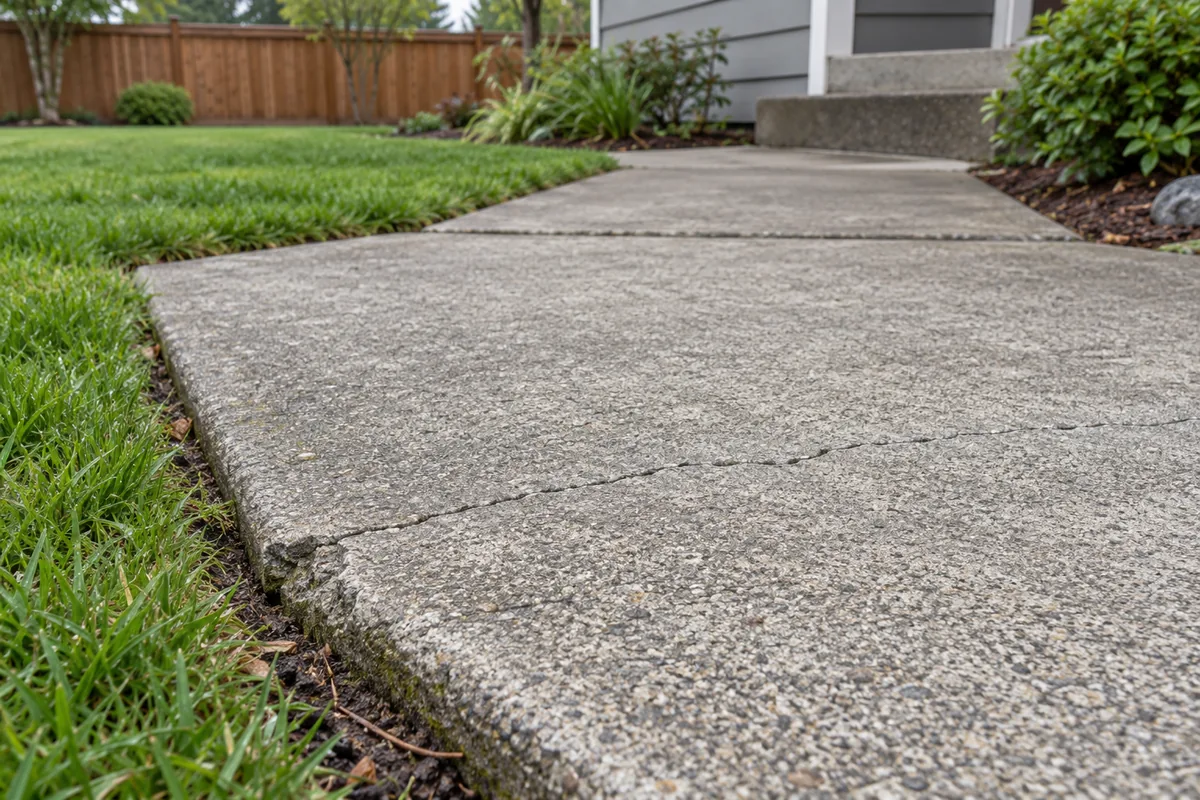
Understand the damage. Choose the right repair.
Describe what has changed
Tell us where the damage is, when you first noticed it and whether it appears to be getting worse. Photos from ground level can help with an initial conversation. You do not need to identify the cause or test a damaged surface yourself.
Separate appearance from movement
A shallow chip, a crack through a panel and an uneven joint call for different evaluations. A surface patch cannot be assumed to stabilize a moving slab. Water entry, loss of support and repeated damage should be considered before selecting a repair material.
Set expectations for the result
Repair materials may differ in color and texture from the surrounding slab. Ask whether the goal is to improve usability, address an opening, protect an edge or renew appearance. A repair should have a clear purpose and limitations in the written scope.
Compare the alternatives
Localized repair can be sensible when the surrounding concrete is sound. Extensive deterioration, repeated movement or problematic elevations can favor replacement. Any specialist work, such as lifting or structural repair, needs confirmation of suitability and availability before it is included.
Questions about concrete driveway & patio repair
Can every crack be filled?
A filler is not a universal solution. Crack location, movement, water exposure and the condition of the surrounding slab influence the appropriate response.
Will repaired concrete look new?
Not necessarily. A sound repair may remain visible. If appearance is the main concern, discuss the limitations of patching and whether broader replacement is a better fit.
Uneven Concrete Driveway: Leveling vs. Replacement
An uneven concrete driveway in Spokane may require evaluation of leveling, panel replacement or broader reconstruction. Confirm the cause and specialist availability before choosing a method.
Describe the movement safely
Tell us where the height difference appears and whether it has changed. Mention nearby drainage, downspouts or previous excavation. Do not attempt to lift or undermine the slab yourself. Keep people away from a clearly unstable area while arranging an assessment.
Understand the options
Depending on condition and access, the discussion may include panel replacement or a specialist evaluation for lifting. Neither is automatically suitable. A badly fragmented slab, drainage conflict or unsuitable elevations can change the choice.
Ask about the underlying cause
If water or loss of support is involved, address that condition in the proposal. Restoring the visible level without considering the cause may leave a recurring problem. Ask how the finished surface will meet adjacent slabs and carry runoff.
Confirm the actual service scope
Lifting, foundation stabilization and structural repair are specialist scopes. Their availability and suitability must be confirmed separately. A flatwork replacement estimate should identify removal, support preparation and restoration rather than promise an unseen repair method.
Spalling Concrete Driveway: Repair or Replace?
For a flaking or spalling concrete driveway in Spokane, repair suitability depends on the depth and extent of surface damage and the condition of the remaining slab.
Describe the affected area
Spalling and flaking refer to loss of material at the surface, but depth and extent vary. Tell us whether the problem is isolated to an edge or spread over a driveway or patio. Mention the approximate age and any treatments or products previously applied.
Avoid an appearance-only decision
Surface deterioration can have different causes, and a new coating does not automatically solve them. The assessment should consider whether sound concrete remains beneath the damaged area and whether moisture or movement is contributing. Loose material needs to be addressed in the chosen scope.
Compare repair boundaries
A small localized repair may be reasonable in a sound slab. Extensive deterioration may make patching less attractive because of preparation, appearance and the remaining condition. Ask where the repair stops and what result is realistic next to existing concrete.
Agree on future care
Request cleaning and winter-care instructions appropriate to the concrete and any repair product. Avoid assuming that a sealer can reverse deterioration. If sealing is proposed, ask what it is expected to accomplish and what preparation is needed first.
Concrete Driveway Repair vs. Replacement in Spokane
Choosing concrete driveway repair or replacement in Spokane starts with the extent of damage, slab stability and drainage. Compare the limits of each approach before committing.
Identify the outcome you need
Improving appearance, removing a trip point and correcting a drainage problem are different goals. Describe the problem in everyday terms. The assessment should explain whether the proposed treatment addresses that goal or only changes the visible surface.
When a localized repair may fit
Limited damage in otherwise sound, stable concrete may be suitable for targeted work. Ask about preparation, material compatibility and the expected appearance. A patch can remain visible even when it serves its intended purpose.
When replacement deserves a closer look
Widespread breakup, repeated movement, unsuitable elevations or multiple failing repairs may make broader replacement more practical. Removing concrete also creates an opportunity to inspect support and revise drainage. That does not mean every crack requires a new slab.
Compare complete alternatives
Request the rationale, limitations and included restoration for each option. Consider how partial replacement will look and function next to older concrete. Specialist stabilization or structural concerns need the appropriate assessment rather than a cosmetic repair assumption.